

Every fortnight or so we’ll bring you some technical updates that we hope you’ll find useful.
Today’s topics are The State of Programmatic in JAPAC, McKinsey’s Ten Top Tech Trends & a significant GDPR fine for a tier1 publisher in France.
The State of Programmatic in JAPAC (2021)
OpenX and ExchangeWire have recently released joint research for 2021 highlighting continued growth in programmatic spends across the Japan and Asia-Pacific (JAPAC) region – with nearly two-thirds of firms having increased their programmatic activity from last year.
Here are some key take-aways:
- Some 30% of agencies, publishers and brands recorded higher programmatic revenue or spend compared to pre-Covid figures. 31% of publishers are generating over 40% of their revenue via programmatic – whilst over on the buy side, 21% are allocating over 40% of their spend to the channel.
- PMP deals are increasingly becoming a preferred option for most markets, with both buyers and sellers seeking more direct control over their programmatic activity than in previous years. The report predicts that with the eventual deprecation of third-party data usage, PMP deals are set to become all the more important across JAPAC.
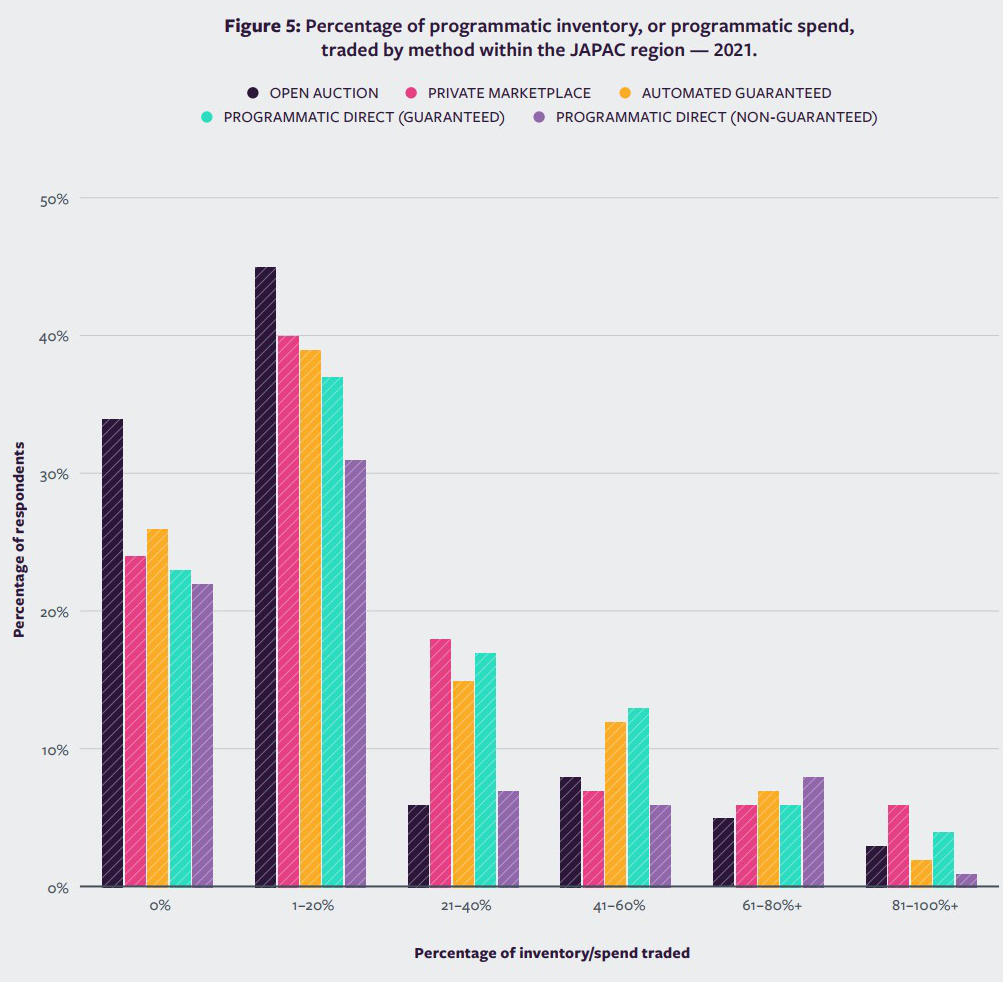
- Buyers are acting over concerns of transparency, and are more confident in amending their programmatic pipelines. Two-thirds (67%) of marketers and agencies have run Supply Path Optimisation (SPO) review in the previous 18 months, with 32% indicating that it was the first one they have ever done.
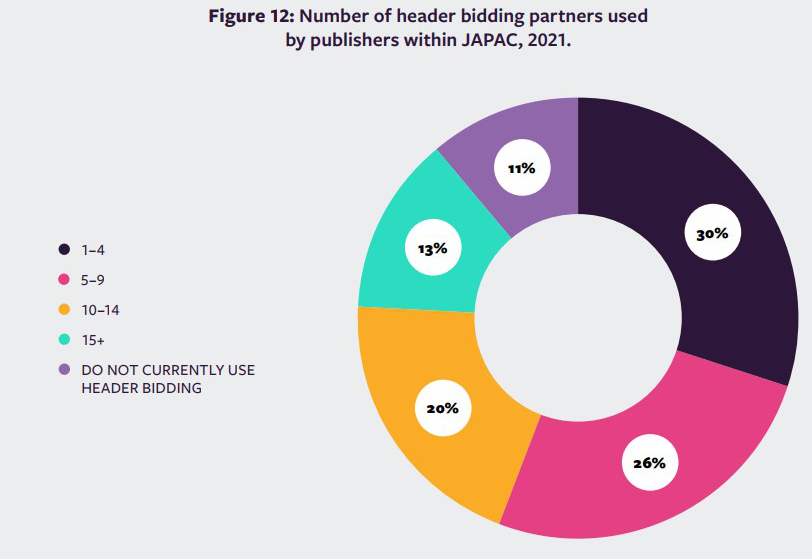
- Publishers have matured in their strategic selection of header bidding partners, while the use of prebid has increased by over 10% market-wide. Compared to 2020, publishers are using relatively fewer providers than in 2020 and prioritising ease of setup when existing providers are not meeting expectations.
- Two-thirds (67%) are concerned about the effect of IDFA and cookie deprecation, with 29% very concerned about these changes.
- Only 16% of buyers are increasing walled garden ad spend in response to IDFA and third-party cookie deprecation, whereas 27% are investing in exchange, SSP, and DSP partnerships.
To read the full report simply click here
McKinsey’s Ten Top Tech Trends
McKinsey’s Technology Council is a round-table of the prominent global experts convened in 2020 to assess and track emerging trends in business and technology most likely to create a competitive advantage over the next 5-10 years. This Council has now released a Top Ten Trends in Tech report, as a primer looking at the top 10 technologies attracting most VC money and seeing the most patent filings.
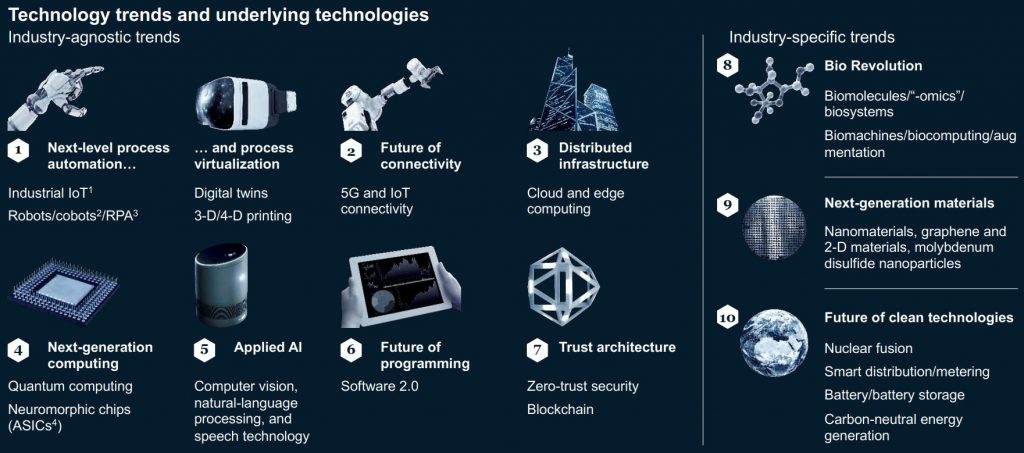
Predictably, machine learning is a prevalent theme across the technology trends – and McKinsey believes this will shape the technology strategy across many industries. Application areas include using technology such as natural language processing, machine vision and speech technology for rapid development cycles, improving custom insights, and reducing repetitive tasks.
Many of these trends ring true as key considerations for digital advertising and indeed, the majority of trends highlighted are digital. Topics such as 5G, AI and blockchain have been hot topics for a while now and interestingly the Council predicted that by 2027 10% of global GDP could be associated directly with blockchain. To access the report and findings simply click here
Some of the key trends are:
- Next-level process automation and virtualization: The Industrial Internet of Things, Robots/cobots/robotic process automation; Digital twins; 3-D or 4-D printing
- The future of connectivity: 5G, The Internet of Things
- Distributed infrastructure: Cloud computing; Edge computing
- Next-generation computing: Quantum computing; Neuromorphic chips
- Applied AI: Computer vision; Natural-language processing; Speech technology
Le Figaro’s GDPR Fine
There have been a number of fines for some of the larger platforms in Europe since GDPR came into force in May 2018. However, there have been very few fines for publishers – so the news that the iconic Le Figaro (the second largest media owner in France) had been fined 50,000 Euros feels genuinely significant as an indicator of intent.
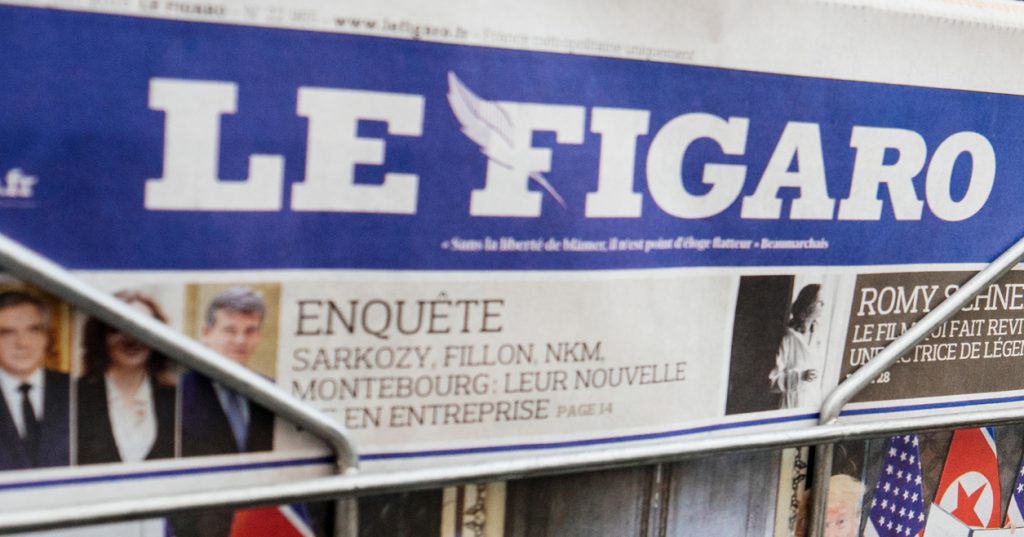
France’s Commission Nationale de l’Informatique et des Libertés (CNIL) imposed the fine after revealing that through 2020-2021 cookies were regularly being placed on the computers of visitors to the lefigaro.fr website without consent.
A lawyer from at a Paris law firm felt that the decision had been taken by the CNIL as ‘an example’ to other websites and is effectively putting the European publishing industry on notice. This recommendation does extend to non-European publishers that attract any European users to their sites and apps – and should act as a warning to any major media owners globally.