

Every fortnight or so we’ll bring you some technical updates that we hope you’ll find useful.
Today’s topics are an update on the latest IDFA opt-in rates, a review of Data Clean Rooms and a closer look at KPMG’s recent report for businesses working to improve consumer trust.
Latest IDFA Opt-In Rates
Since Apple released iOS 14.5 in April this year and enforced the App Tracking Transparency (ATT) framework Australian consumers have been gradually adopting and using the IDFA opt-out.
We’ve been using the excellent AppsFlyer public dashboard to try and keep on top of the local numbers, which shows an almost 80% adoption rate for iOS 14.5+ in AU&NZ – and some solid local opt-in rates, however these are somewhat varied depending upon the types of apps.

Verizon Media’s Flurry Analytics are seeing 25% opt-in rates globally and are even now provocatively declaring that the The IDFA is dead to ensure that this shift is taken seriously by marketers.
A recent report from PubMatic highlights the commercial impacts that they are seeing from the programmatic bidding activity across their platform and provides some interesting insights and recommendations. From these insights they are seeing higher opt-ins for those using commerce, business, and gaming apps as those users within those environment are keener to keep across new product launches, the latest news and gaming titles – and hence are keener to enable their IDFAs for targeting.
Additionally this is increasing the overall value of those opted-in Apple users which gives hope for all app developers whilst inevitably over the past few months PubMatic have seen a shift in spends from iOS environment into Android.
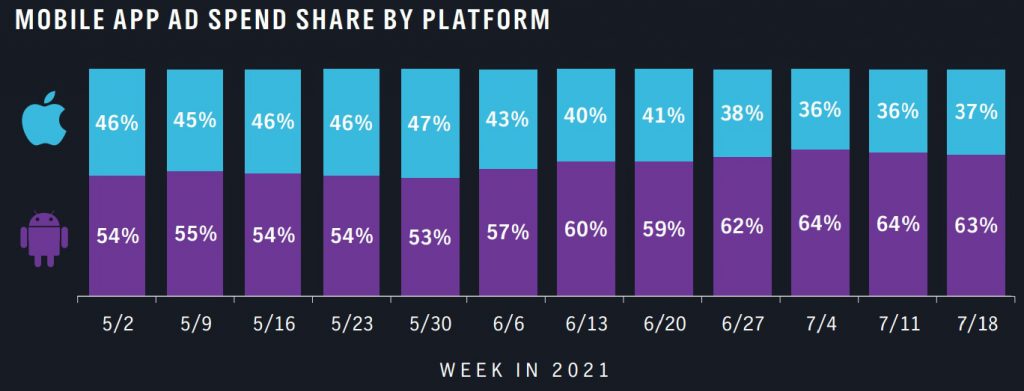
Our advice to the industry remains to fully adopt and embrace the SKAdNetwork API and thoroughly test Apple’s Private Click Measurement attribution tool. Additionally, app developers should continue to work on optimising as much as possible the native prompts to try to explain the value of opting-in and enabling consumers to understand the value to them of giving consent to use their data. For some live examples of various ATT prompts visit ATTprompts.com
For all our related content and guides simply visit our dedicated one-stop-shop and to download the full PubMatic report simply click here
Data Clean Rooms
Whilst not necessarily a new concept, a Data ‘clean room’, or ‘safe haven’ – has more recently become an increasingly popular term for a form product evolution in data-driven marketing, analytics and advertising. Uploading and matching audiences against large databases has been a common practice for some time with data brokerages, major global credit bureau businesses and through more specific products such as Facebook’s Custom Audiences.
With increased scrutiny in terms of data governance globally, the emotional baggage from the Cambridge Analytica scandal, some very public major data breaches and a significant increase in demand for leveraging consensual first party data – the industry has been seeking simpler methods to work responsibly with sensitive customer-level data to target ads and measure performance whilst still ensuring responsible privacy practices and mitigating any related risks. The basic capabilities of legacy DMPs matching cookies and CRM database matching services are no longer future-proof given the changing tides of privacy globally and resulting restrictions imposed by many of the major platforms such as Google and operating systems such as Apple’s iOS.
The overall approach of data clean rooms are to enable businesses with legitimate access to large amounts of data to be able safely and securely keep and update that information without directly accessing the raw data, negating the risk of ever exposing the consumer data. Thereafter – other companies (second parties) can bring their own data and campaign insights from one clean room and compare it with another, again without directly exposing the customer data.
By bringing the two data sets together and co-enriching based upon any overlaps advertisers can then safely compare and contrast their data with a second party to enable brands to see how the different types of data may match up, leveraging any inconsistencies and insights between the two to determine whether they’re over-serving ads to similar audiences. In effect this enables your first-party data to be made available as second-party data for analysis without having to share their raw data or hand control over to another company.
Inevitably, Google currently have the best known version of this product type – with Ads Data Hub (ADH) as per the visual below. However other major platform are following suit and we can expect to see a plethora of solutions to support these practices across the open internet also.
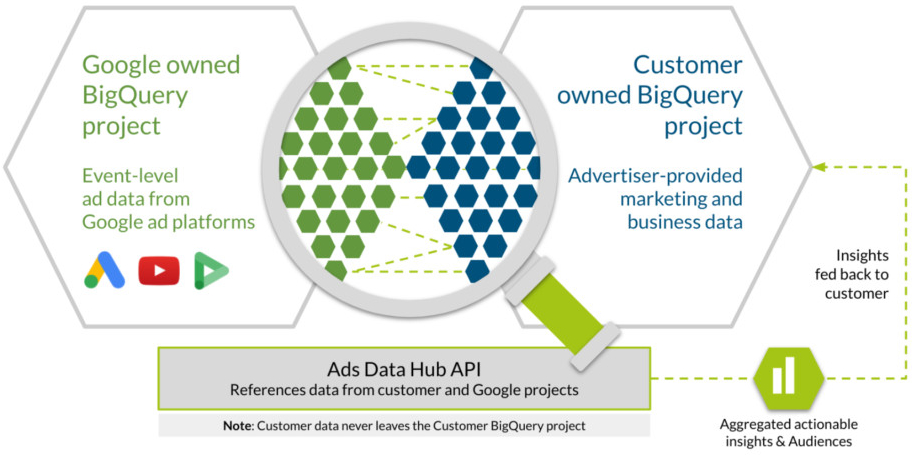
This general philosophy of ‘zero contamination’ has been leveraged from manufacturing and the concept is over 50 years old, invented by Willis Whitfield – who was challenged to find a way to stop microscopic dust particles from infiltrating mechanical components in the manufacture of nuclear weapons. These processes came to revolutionise manufacturing in electronics and pharmaceuticals, improved safety and even enabled further space exploration. That strict approach and mindset should be considered when looking to work in these environments and with these tools. It’s privacy-first and zero risk mantra for any businesses – at all times.
Hence, there are a few simple questions that should always be asked when considering these tools and practices, and ensuring you have the right legal, analytical and technical resources are paramount:
- Is there enough scale and quality in the data to justify this solution?
- Are all the local and global data governance requirements being met?
- Is all the data being responsibly and transparently collected and managed?
- Will you be able to view individual customer journeys across all devices and offline touch-points?
- Can you meaningfully analyse, activate and measure any channel or media partner with full performance transparency – again down to the individual level?
- Do you have complete confidence and trust in the vendor and other parties involved in their related practices in terms of responsible data governance?
The hope is that with the evolution of clean rooms the industry can start to make effective yet responsible first-party data sharing practices much easier, more efficient and less risky. Our Data council will be keeping on top of this subject and providing further guidance as this product space evolves.
For foundational guidance, definitions and best practices on all things data in digital advertising, simply download our IAB Australia Data Handbook here
Consumer Trust Gap
A new KPMG US-based survey has confirmed that there exists a serious disconnect between corporate data practices and the general population’s expectations around transparency and data privacy. The survey found that:
- 83% would not willingly share their data to help businesses make better products and services
- 64% say companies are not doing enough to protect consumer data
- 47% believe their smart devices are listening to their conversations
- 40% say they don’t trust companies to use their personal data ethically
- 13% don’t trust their own employer to use their personal data ethically
As companies collect more personal data, survey respondents clearly declared that they are increasingly concerned about how their data is being used and have genuine concerns over the relentlessly high levels of data collection.
This comes as no surprise, but what was more interesting what that this was a perspective also shared by the business leaders – which has not always been the case in the advertising world… let’s face it.
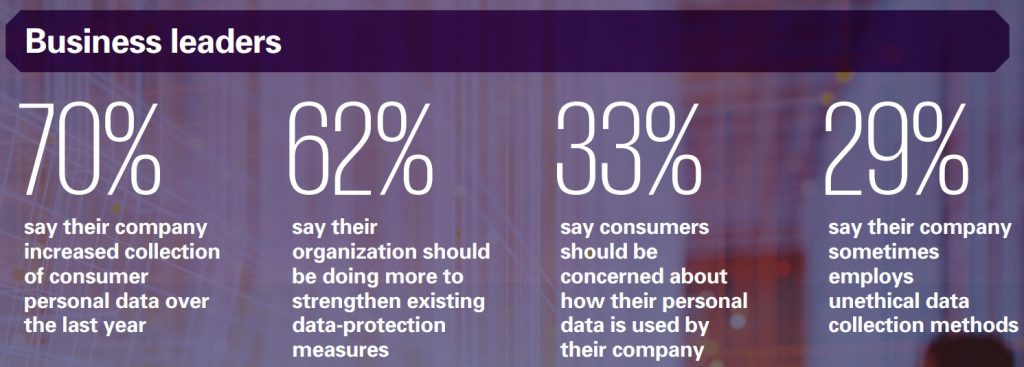
However the report ultimately sees opportunities in this area rife with risks. KPMG make several key strategic recommendations including:
- View better data management not as a risk-avoidance exercise, but as an opportunity
- Be more explicit and transparent about how consumer data will be used
- Give consumers more direct control over their personal data
- Make data anonymous to whatever extent possible
- Tap into the power of competence, integrity and humanity within your organisation
The full report can be downloaded here