

Every fortnight or so we’ll bring you some technical updates that we hope you’ll find useful.
Today’s topics are a look through a recent Australian Media Consumer Survey, provide some notes on Apple’s forthcoming iOS 15 privacy features and take a closer look at CDPs.
Apple iOS 15 Privacy Features
Apple’s iOS 15 is now available in Australia (I installed it yesterday) and it includes a number of new privacy features – the most noteworthy of which is called Mail Privacy Protection (MPP).
MPP prevents senders from using tracking pixels and also prefetches and caches any images within emails, resulting in those emails immediately registering as being opened even if the recipient did not physically open the email. This feature is significant as it will quickly render useless many of the traditional metrics used in email list management, sending and marketing and will have a genuine impact on many of the well-known and widely used email marketing capabilities that would track device and location data from tracking pixels.
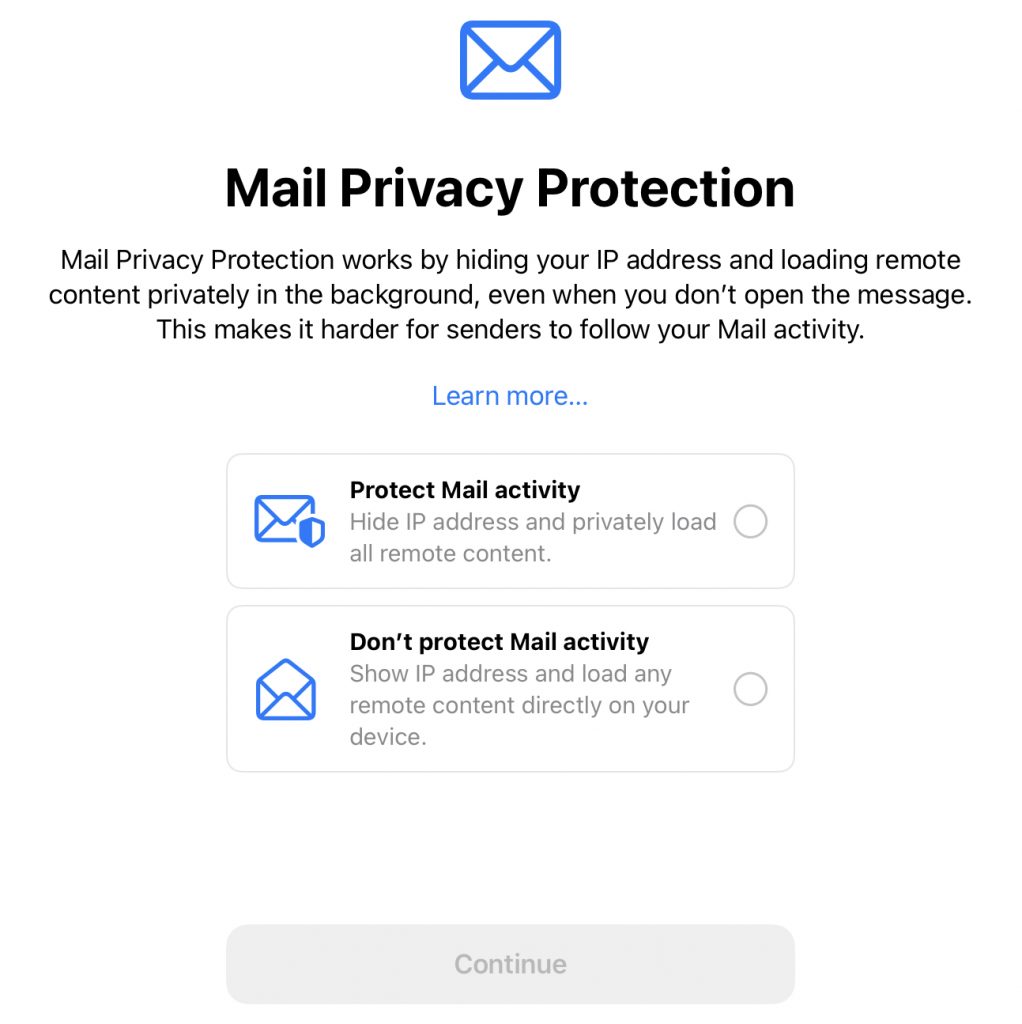
This, and other new privacy features within iOS 15, put a heavy onus on data governance, genuine consumer transparency, and building deeper and more personalised relationships with customers. We recommend that our members start to:
- More carefully consider the quality, clarity and regularity of your messaging
- Focus on persistent metrics such as clicks and purchases
- Relentlessly test in order to work out which metrics really matter
- Proactively update and maintain your email lists to ensure quality
- Consider also using other channels such as SMS
Other new features of note in iOS 15 are:
Hide IP Address – will provide you with the option to hide your IP address from online trackers and websites as you browse.
App Privacy Report allows you to see how many times a permissioned app has accessed your photos, camera, microphone and contacts over the past 7 days.
Built-In Apple Authenticator will enable you to quickly authenticate within the Apple eco-system without having to use an external authentication service or SMS.
Share Current Location provides location sharing just once for a single session, and immediately ends any location access after that session is complete.
Private Relay is an iCloud Plus subscription service which hides your IP address from the websites you go to and encrypts your internet traffic by bouncing it through two servers.
Hide My Email is an iCloud Plus subscription service which will be integrated into Safari, Mail, and iCloud Settings and will enable you to create random email addresses that forward to your personal inbox without you having to ever share your real credentials.
To review all of Apple’s iOS & iPadOS Release Notes simply click here
Customer Data Platforms
With all of the efforts in the advance of third-party cookie deprecation for digital marketing the evolution of solutions required have been shifting from traditional DMPs over to the fuller suite of capabilities that we see in CDPs.
We have touched upon this topic in the Data handbook published last year, but it’s soon time for a refresh of the content therein and a fuller look at CDPs – and this info can perhaps act as a starting point.
CDPs differ from DMPs as they will usually use persistent 1st party data rather than 2nd and 3rd party data which is not retained for as long. Additionally and critically CDPs will collect and manage sensitive personal consumer data in the form of personally identifiable information (PII) – whilst DMPs hold anonymous data most typically in the form of cookies.
As defined by the CDP Institute a CDP acts as “packaged software that creates a persistent, unified customer database that is accessible to other systems.” Hence the levels of governance and privacy obligations when considering the usage of these platforms are very high.
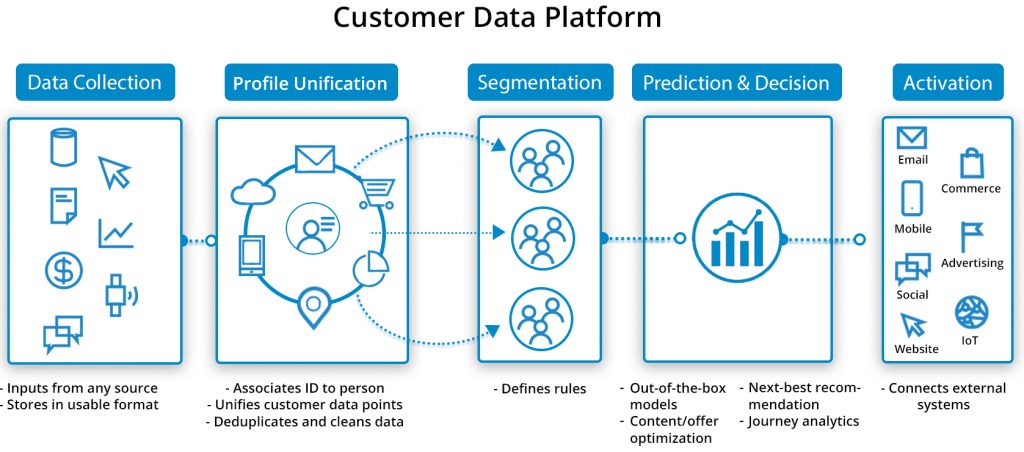
Some of the basic capabilities to expect from a CDP are that:
- Marketers should be able to manage the day-to-day running of the CDP with just light support from IT departments or tech teams as and when required.
- It should be capable of collecting data from multiple sources such as servers, CRM, and email, while unifying that data to create individual profiles.
- It should have a web-based UI that allows marketers to segment customers into custom audiences.
- It should be accessible to external systems where data can be shared through emails, apps, social media, web, and mobile.
Due to the sensitivity of the data being handled it is critical to ensure that you have access to the right levels of resources in terms of technical skills, analytical skills and legal advice. The related complexity as a result of the increased capabilities and responsibilities are significant versus traditional CRM systems and DMP platforms.
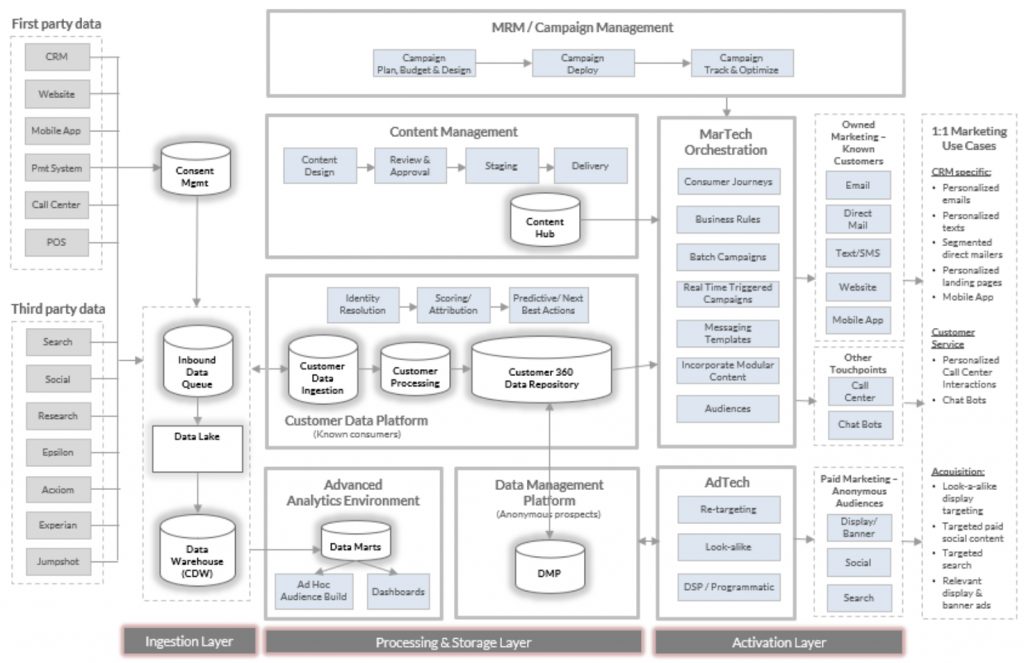
Also, and rather interestingly, the CDP Institute also groups CDP vendors into four different categories – based upon the functions provided by their systems. Each category includes functions provided by the previous categories and there are a some variations within each category, depending upon the provider.
Data CDPs – gather customer data from source systems, link data to customer identities, and store the results in a database available to external systems. This is the minimum set of functions required to meet the definition of a CDP. In practice, these systems also can extract audience segments and send them to external systems. Systems in this category often employ specialized technologies for data management and access. Some began as tag management or Web analytics systems and retain considerable legacy business in those areas.
Analytics CDPs – provide data assembly plus analytical applications. The applications always include customer segmentation and sometimes extend to machine learning, predictive modeling, revenue attribution, and journey mapping. These systems often automate the distribution of data to other systems.
Campaign CDPs – provide data assembly, analytics, and customer treatments. What distinguishes them from segmentation is they can specify different treatments for different individuals within a segment. Treatments may be personalized messages, outbound marketing campaigns, real time interactions, or product or content recommendations. They often include orchestrating customer treatments across channels.
Delivery CDPs – provide data assembly, analytics, customer treatments, and message delivery. Delivery may be through email, Web site, mobile apps, CRM, advertising, or several of these. Products in this category often started as delivery systems and added CDP functions later.
For an independent overview of the CDP marketplace from Real Story click here
As mentioned, we will be reviewing this product space more fully – but for now for some foundational guidance, definitions and best practices on all things data in digital advertising, simply download our IAB Australia Data Handbook published in 2020 from here
Media Consumer Survey
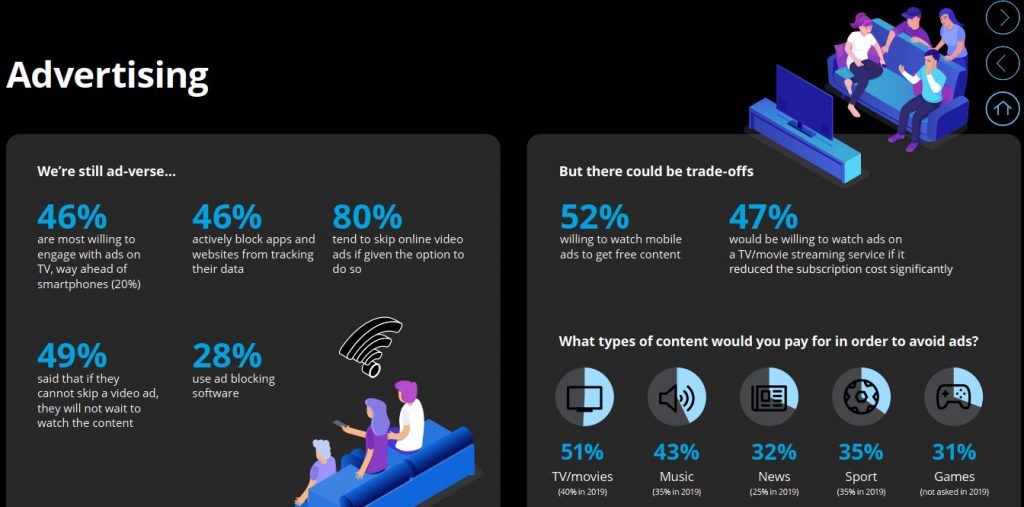
Deloitte’s recently released Australian Media Consumer Survey provided plenty of interesting insights on digital entertainment and the subscription info over five generations – examining the behaviours, preferences and trends impacting the industry as well as how they may shift in the future.
Most of the commentary on this report has been around the success of the subscription services, however there is also much to support the approach of ad-funded models. The most successful BVOD advertising takes a tailored approach, using personal data and browsing history to target advertising. In terms of accepting advertising, the value-trade off of a more personalised experience in exchange for using data still resounds with audiences across the sociodemographic ranges.
The other core findings were:
- 80% of Australian households now subscribing to at least one paid streaming service.
- 58% of respondents raising concerns about the costs of having multiple services.
- The average Australian household has 2.3 TV or movie streaming subscriptions, with younger people the heaviest consumers.
- 95% of Gen Z have at least one subscription service, followed closely by 93% of millennials, figures that have risen in the past 12 months. 60% of this combined cohort have more subscriptions than a year ago.
- 45% of respondents were open to subscribing to multiple services to meet their entertainment needs, up from 37% a year ago.
The full report can be downloaded here