

Every fortnight or so we’ll bring you some technical updates that we hope you’ll find useful.
Today’s topics are an update on the most recent proposals for Chrome’s Privacy Sandbox, a look at some open-source projects that are quietly revolutionising the way our industry can work together moving forwards and we pull out some interesting insights from global research on gaming relevant for digital marketing.
Open-Source by design
This week we’ve seen the development of The Trade Desk’s UID 2.0 being donated to the industry for anyone and everyone to utilise, leverage and collaboratively improve upon. This is now one of a number of benevolent and collaborative open-source projects gaining prominence across our industry.
Prebid.org – the success of header bidding led publishers to adopt more and more ‘bidders’, and eventually, publishers needed a new solution, commonly known as a container or wrapper, just to manage all of their header bidding partners. Publishers had a few options to do this, but prebid.js which launched in 2015, was specifically designed to be a new type of open source container for publishers.
Any publisher can use the code, and any company in the ecosystem to add to the code. The transparent and open nature of Prebid helped many rethink what was possible with a container, and the community that built up around Prebid helped unify a fragmented ad tech space and provide a level of consistency and collaborative innovation that simply was not present previously. From this framework, Prebid has continued to grow and today, is the fastest growing header bidding solution in terms of usage and adoption.
OM SDK – the Open Measurement Software Development Kit (OM SDK) eliminates the requirement for app developers to implement various SDKs in order to enable measurement core measurement insights across display, native and video by incorporating a number of vendor solutions within one SDK.
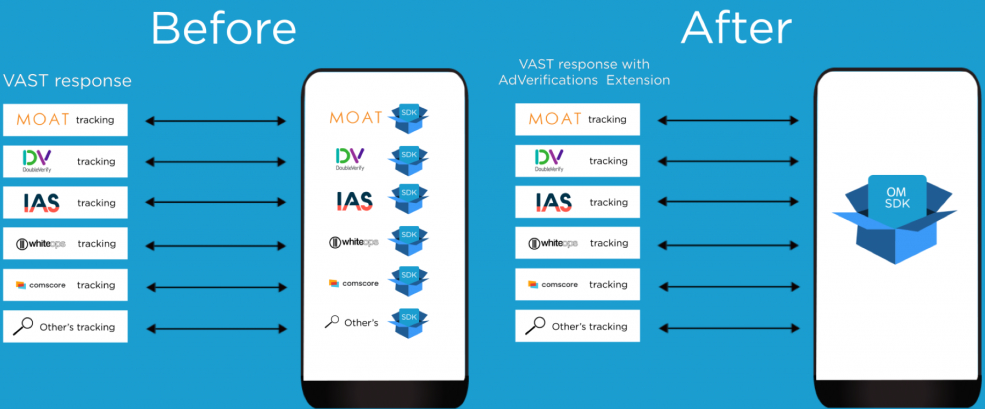
The initiative was originally launched in 2018 with a number of founding members – comScore, DoubleVerify, Google, Integral Ad Science, Oracle’s Moat, and Pandora. By joining forces, bringing together their different perspectives, and offering technology and other resources to ensure that IAB Tech Lab could release a single SDK to simplify mobile measurement for everyone, making integration easier for app developers and access to preferred providers more flexible for advertisers.
Each incremental release of the SDK has brought with it improved capabilities and features that benefit the entire industry and make it easier for both buyers and sellers to implement and leverage.
UID 2.0 – with third party cookies being depreciated for digital marketing from 2022 a lot of work has gone into enabling alternate solutions for create targetable audience segments, campaign management and measurement moving forwards. One option is having 1:1 linked audiences between publishers and advertisers, using either an explicitly opted-in device-based ID or a secure user-enabled ID. This has to be secured, have transparent uses, and offer consumer privacy-focused controls.
The Trade Desk has been developing a user-enabled ID called Unified ID 2.0 and has recently open-sourced the code and donated it to IAB Tech LAb to oversee. This enables full transparency on the UID 2.0 code base so that anyone can see and confirm the processes the code performs, as well as monitor and suggest changes to the code.
UID2 will not be the only secure user-enabled ID available and IAB Tech Lab will welcome other source code contributions from the industry as potential industry-owned addressability solutions – and any such proposal will also undergo a parallel review process.
Gaming Insights for Marketers
We’ve recently launched a Gaming Working Group to help support digital marketers to effectively understand and leverage the evolving opportunities in this increasingly exciting space. As a key element of working out what to focus upon (for example this webinar) moving forwards we have been collating bits of related research from wherever we can for review.
Here are a few insights that I personally found very interesting:
The engagement levels are very high across all ages
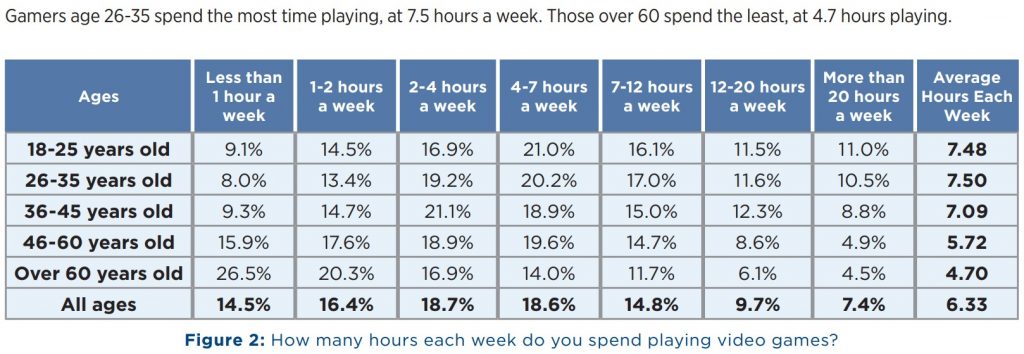
Source: Limelight Networks, The State of Online Gaming 2020
The engagement levels are across a multitude of devices
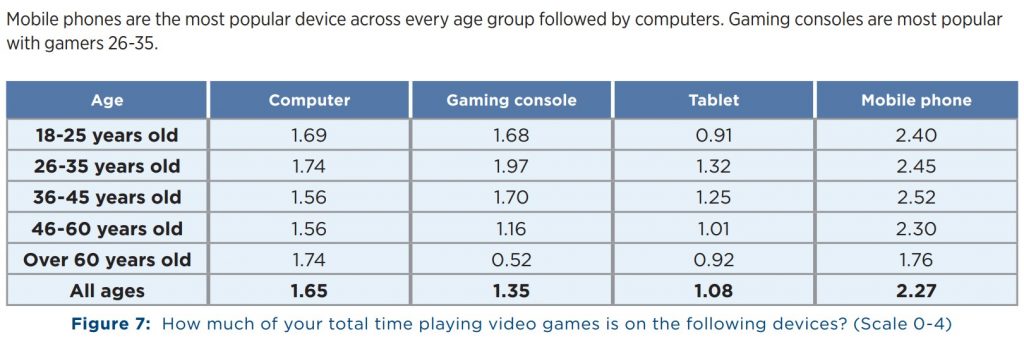
Source: Limelight Networks, The State of Online Gaming 2020
Savvy brands and celebrities are generating massive engagement numbers

Source: SuperData, 2020 Year in Review
There is still more potential for growth here in Australia
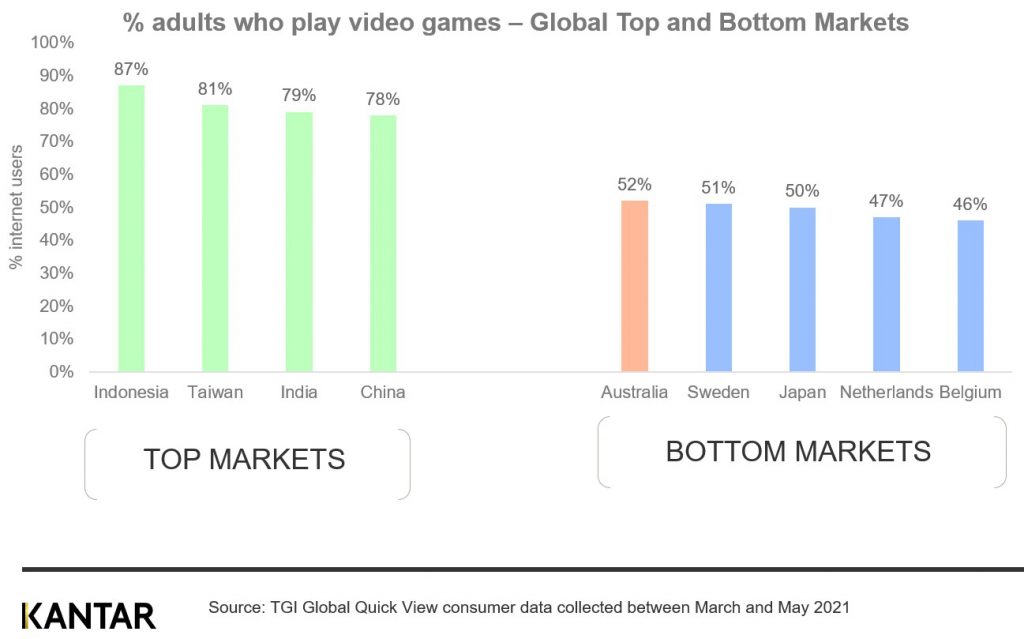
There are unique audience segmentation opportunities that can be leveraged
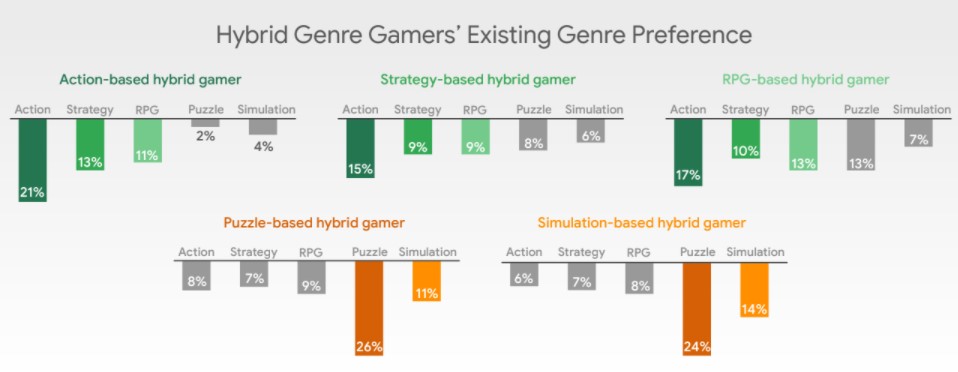
Source: Google Hybrid Genre Gamer Insights Report, executed by Kantar Australia, June 2020
Privacy Sandbox Update
As the proposals for Chrome’s Privacy Sandbox are evolving, we thought that we’d try and provide a general update across the key areas that Google have recently clarified – along with links to the specific GitHub repositories for each project.
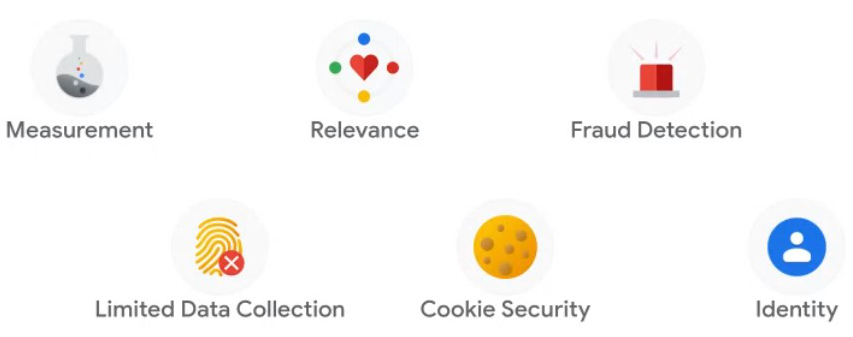
Relevance: FLoC (Federated Learning of Cohorts) – is an API that generates clusters of similar people into interest groups based upon behavioural relevance, known as ‘cohorts’. Data is generated locally on the user’s browser, not by a third party. The browser shares the generated cohort data, but this cannot be used to identify or track individual users. This enables companies to select ads based on the behavior of people with similar browsing behaviour, while preserving privacy
Relevance: TURTLEDOVE – is a remarketing API that will enable the final ad auction to choose the most relevant ads to be moved to the browser. The API leverages information which is only stored in the user’s browser itself, about advertisers the user had previously expressed an interest in, along with information about the current page. Two requests are sent for ads: one to retrieve an ad based on contextual data, and one to retrieve an ad based on an advertiser-defined interest. The browser has the responsibility of ensuring these requests are independent and uncorrelated so they can’t be linked together to let an ad network know that the requests are from the same person.
Measurement: Conversion Measurement API – is an API which can determine click-through-conversion measurement without using any cross-site persistent identifiers.
Measurement: Aggregated Reporting – is an API to provide mechanisms to support a variety of use cases such as view-through-conversion, brand, lift, and reach measurement.
Fraud Detection: Trust Tokens API – can enable an origin that trusts a user to issue them with cryptographic tokens stored by the user’s browser to be used in other contexts to evaluate the user’s authenticity.
Limited Data Collection: Privacy Budget – this will limit the total amount of potentially identifiable data that sites can access, thereby reducing the amount of potentially identifiable data revealed. With this, a browser could allow websites to make enough API calls to get enough information about you to group your into a larger cohort, but not to the point where you might give up your anonymity.
Limited Data Collection: Willful IP Blindness – enables sites to ‘blind’ themselves to IP addresses so they can avoid consuming privacy budget.
Limited Data Collection: User-Agent Client Hints API – enables developers to actively request information about the user’s device or conditions, rather than needing to parse it out of the User-Agent (UA) string. The API provides access to the same information, but in a more privacy-preserving way, in turn enabling browsers to eventually reduce the User-Agent string’s default of broadcasting everything. Client Hints enforce a model where the server must ask the browser for a set of data about the client (the hints) and the browser applies its own policies or user configuration to determine what data is returned. This means that rather than exposing all the User-Agent information by default, access is now managed in an explicit and auditable fashion.
Cookie Security: SameSite cookies – allows developers to designate their cookies (via three attributes – strict, lax, or none) for secure cross-site access, if the browser policy permits it.
Cookie Security: First-Party Sets – allows related domain names owned by the same entity to declare themselves as belonging to the same first party.
Identity: WebID – is a proposal for federated sign-in API that can enable sign-ins and sign-ups for users whilst still fully preserving their privacy.