Every fortnight or so we’ll bring you some technical updates that we hope you’ll find useful.
Today’s topics are a preview of GAM’s forthcoming Dynamic Exclusion Lists, the growing trend of single-sign on solutions and we take a closer look at a Privacy Sandbox alternative called SWAN.
Single Sign-On (SSO) Solutions
With the depreciation of third-party cookies next year there’s much talk of publisher consortiums being a strategy that can enable second-tier publishers to compete in terms of scale with regards to authenticated first-party audiences.
One approach along this lines has been prevalent in Europe for a while now since GDPR, single sign-on solutions. Traditionally these solutions enable consent for consumers with credentials such as usernames and password for easy access to multiple applications, but can be replicated for capturing consent signals as a method of authentication as part of a federated identity system.
European publishers have been investing in the space for some time now, encouraging users to register to access their content via log-in alliances such as NetID, Nonio, Verimi and PassMedia.
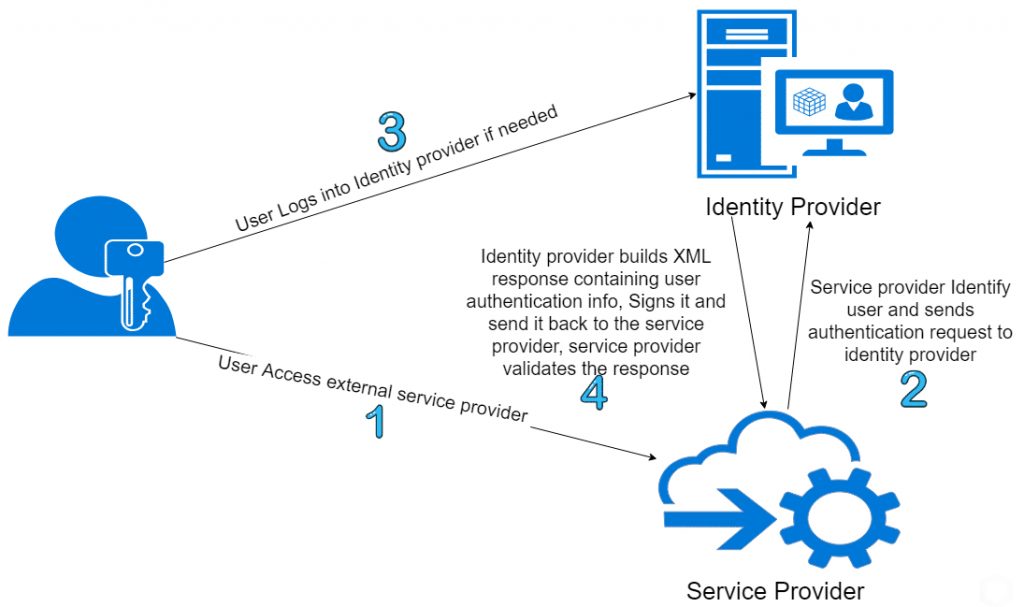
More recently Criteo have developed OpenPass as a consumer-facing component of Unified ID 2.0 and in the US the Local Media Consortium, a network of more than 1,700 regional publishers, announced NewsPass ID as a SSO and collective audience and network monetisation strategy.
As an open value exchange between publishers and consumers via a clear quid-pro-quo the approach, when combined with user-enabled ID’s could enable meaningful reach with authenticated audiences and aggregated content solutions. The Ad Network business model could potentially be about to make a comeback…
Secured Web Addressability Network (SWAN)
Since Google announced Privacy Sandbox a number of proposals and suggested iterations have subsequently also been announced. Additionally an alternative open source, decentralized approach called SWAN (backed by ad tech companies including PubMatic, OpenX and Zeta Global) has been announced is designed to support a competitive ecosystem of ad monetization, site-security and fraud prevention solutions, managed through a set of core principles.
The SWAN ID is stored in a browser cookie file and thus works only for a single browser. Consumers can choose to provide an optional email that can persist their preferences across additional browsers and devices they may use. Any receivers of this hashed email are restricted from re-identifying the individual associated with this pseudonymous identifier.
In terms of consumer experience, the very first time the web browser is used with SWAN the User Interface Provider (often a CMP) will display a dialogue (see below) to capture SWAN’s preference for personalised marketing and optionally an email address. This data will then be written to the SWAN Network and setup will be complete.
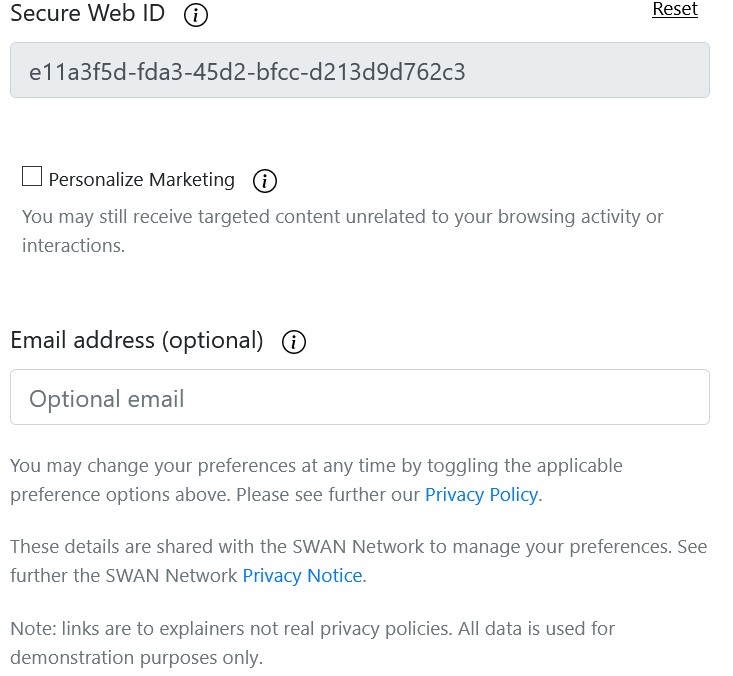
Both the initial request to retrieve the information and the subsequent write request will require multiple redirects to ensure the data is recorded across sufficient SWAN Operator nodes – and once SWAN preferences are recorded then people need not be bothered for 90 days, or if the browser wipes cookies.
Dynamic Exclusion Lists in GAM
Google recently announced an update to their Advertiser Controls capabilities with the ability to use dynamic exclusion lists, that can be updated seamlessly and continuously over time. The dynamic exclusion lists can be created by advertisers or by third-parties (such as agencies) that they trust. Once advertisers upload a dynamic exclusion list to their Google Ads account, they can then schedule automatic updates as new web pages or domains are added, ensuring that their exclusion lists remain up-to-date.
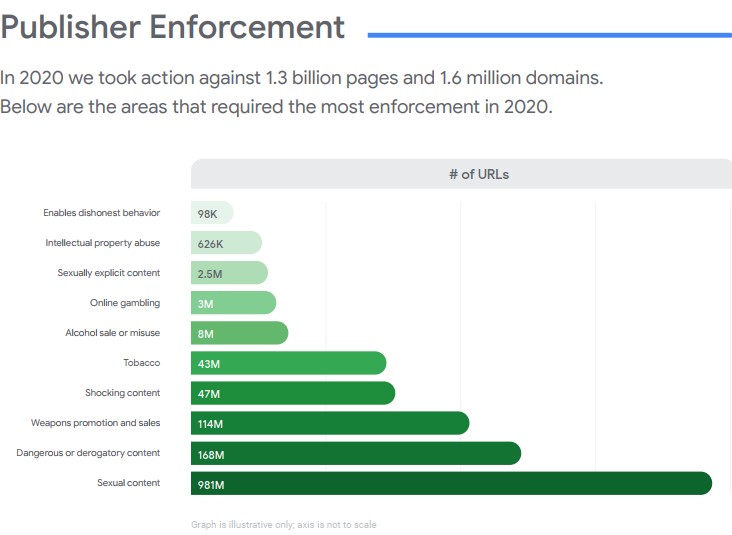
This is in conjunction with other recent quality enforcement efforts announced last month. According to Google’s 2020 annual Ads Safety Report, the number of ad accounts disabled for policy violations increased by 70% from 1m to over 1.7m. They also blocked or removed over 867m ads for attempting to evade their detection systems, including cloaking, and an additional 101m ads for violating misrepresentation policies.
Additionally Google removed ads from 1.3bn publisher pages in 2020, up from 21m in 2019 – as per the below graph.